
DMX-Controlled Power
Power control products that integrate directly into DMX and RDM lighting networks for unified system management.
Popular Filters
Filter Products
Types
+Power Distribution
+Power Control
+Power Accessories
+Statuses
+Series
+Product Region
+
Showing 8 of 8 products
ABOUT DMX-CONTROLLED POWER
Power control for the lighting console.
Integrate circuit-level power management directly into your DMX, RDM, and sACN workflows for simplified control from a single surface.
LynTec DMX-controlled power solutions allow lighting designers and technicians to manage power directly from the same console used for lighting cues. This eliminates the need for separate control systems, custom programming, or protocol converters, simplifying system architecture and reducing potential points of failure. By making power a native part of the lighting network, you gain more precise and responsive control over your entire rig.
This control is available across a scalable ecosystem of products, from the portable DDR relay for truss-mounted fixtures to NPAC rackmount units and full RPC or LCP breaker panels. Whether you are managing a single stage or an entire facility, our DMX-enabled gear provides a consistent, reliable, and integrated approach to power management.
WHY IT MATTERS
Unified control, simplified infrastructure.
01
Control power directly from the lighting console.
Native DMX, RDM, and sACN support allows for direct integration with any standard lighting control system. This simplifies programming, reduces latency, and gives operators a single, familiar interface for managing both lighting and power.
02
Solutions for distributed, rack, and panel-level control.
Deploy DMX control exactly where it is needed. Use the IP-rated DDR for remote fixtures, the NPAC for equipment racks, or the RPC and LCP panels for a complete, facility-wide infrastructure, all on the same lighting network.
03
Engineered for reliable performance in lighting environments.
Our DMX-enabled products are built with robust components, including motorized breakers rated for 200,000 cycles. This ensures dependable operation in demanding touring, broadcast, and permanent installation applications.
FAQ
Your questions, answered.
Common questions about integrating power control with DMX.
Are your DMX-controlled breakers reliable enough for high-use venues?
Absolutely. Our panelboards are engineered for reliability in demanding professional environments. We use robust, motorized breakers, such as the Square D Powerlink breakers in our LCP panels, which are rated for 200,000 on/off cycles. This ensures dependable, long-term performance for applications with frequent power cycling, including performance venues, broadcast studios, and touring rigs.
Can I combine DMX control with other protocols like IP or contact closure?
Yes, our intelligent panels are designed for multi-protocol environments. Products like the RPC, LCP, and NPAC can respond to DMX, sACN, IP (Telnet/HTTP), and dry contact closure inputs simultaneously. This allows for a layered control strategy. For example, you can use DMX for show-specific cues from a lighting console, an IP-based system for building automation, and a contact closure for a simple wall switch or fire alarm integration, all on the same panel.
Do I need a DMX terminator when connecting to a LynTec panel?
Yes, following DMX-512 best practices is critical for reliable communication. A DMX terminator (a 120-ohm resistor) should always be placed on the last device in a DMX chain. Our XLR accessories include options for termination, allowing you to properly complete the DMX signal path at the final wall plate or panel connection point. This prevents signal reflections that can cause erratic control behavior.
Do I need a gateway to connect LynTec power control to my DMX console?
No, a gateway is not required. Our DMX-controlled products are designed with native DMX and RDM intelligence. You can connect them directly to your existing DMX network, and they will be discoverable and addressable from any standard lighting console. This approach simplifies the system architecture and removes a potential point of failure.
Do I need a gateway to integrate an LCRP with my lighting console?
No, a gateway is not required. The LCRP features a native DMX512 input, allowing it to connect directly to your lighting control network. This simplifies system design, reduces potential points of failure, and makes programming more straightforward for lighting technicians, as the panel’s relays appear as simple single-channel fixtures in the console patch.
How do I assign DMX addresses to the motorized breakers?
Each motorized breaker in an LC Series panel is addressed using simple jumpers on its control board. You set the DMX start address for the first breaker, and each subsequent controlled breaker is automatically assigned the next sequential address. This design simplifies commissioning and makes it easy to integrate into your lighting control system without complex software configuration.
How do I control and address the relays in an LCRP panel?
The LCRP is controlled directly via DMX512. Each 30A relay is assigned a single DMX address. You can set the starting DMX address for the panel, and the relays will occupy a consecutive block of channels. A DMX value of 128 or higher will close the relay (On), and a value of 127 or lower will open it (Off). This allows for simple, direct control from any standard lighting console.
How do LynTec lighting products integrate with my control system?
Our lighting ecosystem components are engineered to integrate directly with professional lighting consoles and automation systems using standard protocols. Products like the Dual DMX Relay (DDR) offer native DMX and RDM control, allowing for plug-and-play connectivity. This eliminates the need for gateways or custom programming, simplifying system design and commissioning.
How do modules add control protocols like DMX or BACnet to a panel?
Modules act as dedicated communication interfaces for your power control panel. For example, installing a DMX control module allows the panel to receive signals directly from a lighting console, enabling individual circuit control within a DMX universe.
Similarly, a BACnet module integrates the panel into a building management system (BMS), exposing power control and status monitoring to the central building automation network. Each module is purpose-built to translate a specific protocol into commands for the panel’s internal controller.
How do your panels integrate with third-party AV control systems?
Our power control systems are engineered for seamless integration. Products like the RPC, LCP, and NPAC feature native support for common AV and lighting protocols, including IP (Telnet/HTTP), DMX, and sACN. This allows them to connect directly to control systems from Crestron, AMX, and Q-SYS without requiring custom drivers or complex programming.
Most of our network-enabled panels also include a built-in web server, providing a simple browser interface for setup, monitoring, and direct control from any connected device.
How does LynTec integrate power control into a DMX lighting network?
Our DMX-enabled products offer native support for DMX512, RDM, and sACN protocols. This allows you to connect panels like the RPC, LCP, or NPAC directly to your lighting network without needing gateways or protocol converters. Power control for individual circuits or zones appears as a standard fixture on your lighting console, simplifying programming and reducing system latency.
This direct integration streamlines your infrastructure by allowing lighting designers and technicians to manage power cues from the same familiar control surface they use for lighting, creating a unified and more responsive system.
How does the AVL Ecosystem integrate with third-party control systems?
Our panels are engineered for direct integration. Native support for DMX, sACN, and IP (Telnet/HTTP) allows seamless connection to lighting consoles and AV control systems like Crestron and AMX without external protocol converters. For building management integration, RPC panels also offer an optional BACnet IP interface, simplifying facility-wide automation.
How is DMX addressing managed for individual circuits or zones?
LynTec systems provide flexible DMX addressing. You can assign a unique DMX address to every individual circuit for granular control. Alternatively, you can group multiple circuits into zones within the panel’s web interface. Each zone can then be assigned a single DMX start address, allowing you to control an entire group of circuits from one channel on your console.
This flexibility supports various programming styles, whether you need to control a single moving light’s power or trigger a full stage power-up sequence with a single cue.
What are my options for DMX control, from a single fixture to a full panel?
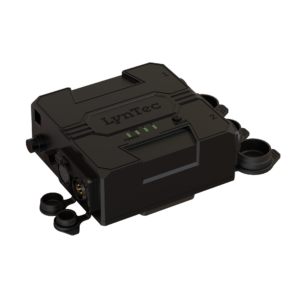
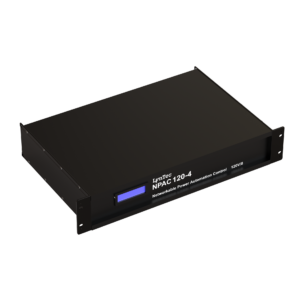
Our DMX control ecosystem is designed to be scalable. For distributed or portable applications, the IP-rated DDR Dual DMX Relay provides two controllable outputs right at the fixture location. For equipment racks, the NPAC offers multi-circuit relay control in a 2RU chassis.
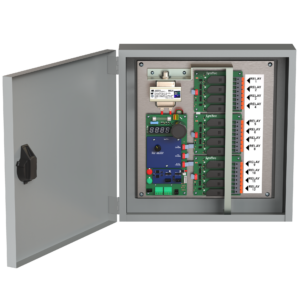
For facility-wide power management, our LCP and RPC series breaker panels integrate DMX control directly at the circuit level for 30 to 168 circuits. This modular approach allows you to specify the right level of control exactly where it is needed, all managed on the same lighting network.
What control protocols are supported for network integration?
Our network-enabled panels provide native support for the most common protocols used in AV and lighting. This includes IP (Telnet/HTTP), sACN, and DMX. This broad compatibility ensures direct integration with lighting consoles and automation systems right out of the box. For projects requiring building management system integration, optional BACnet support is available on our RPC panel series.
What control protocols are supported for remote management?
Our wall-mount panels are designed for seamless integration into modern control ecosystems. They can be managed via IP (Telnet, HTTP, or our web-based GUI), DMX512, and sACN. This allows for direct control from AV control systems like Crestron, AMX, and Q-SYS, as well as lighting consoles and building automation systems, providing flexible and reliable system-wide power management.
What control protocols are supported through your XLR accessories?
Our XLR accessories are designed to maintain signal integrity for any standard 3-pin or 5-pin XLR-based control protocol. They are primarily used for DMX-512 and RDM to trigger sequences and control zones on compatible LynTec panels. The robust construction ensures that the physical connection is reliable, allowing your chosen control protocol to communicate without interference or signal loss.
What control protocols can I use to integrate an RPC panel?
RPC panels are designed for flexible integration. They include native support for IP (HTTP, Telnet), DMX, sACN, and RS-232 control protocols. For integration with building management systems, an optional BACnet IP interface is also available. This allows the RPC to fit into nearly any existing control ecosystem.
What control protocols can I use to trigger XPC sequences?
The XPC system is built for flexible integration into modern control environments. The XPC controller natively supports IP (Telnet), DMX, and sACN for direct control from lighting consoles or AV control systems like Crestron or AMX. It also includes a contact closure interface for simple, dry-contact activation from third-party systems or basic wall switches.
What control protocols do your retrofit kits and relays support?
Our value relay and retrofit solutions are designed for seamless integration into existing AV and lighting systems. They primarily use industry-standard protocols like DMX and RDM for lighting control, as seen in our DDR relay. For broader system integration, many of our retrofit controllers also support RS-232 serial commands. This ensures compatibility with a wide range of third-party control systems.
What control protocols does the LCP support out of the box?
LCP panels are engineered for seamless lighting system integration with native support for DMX, sACN, and IP (TCP/IP). This allows direct connection to any modern lighting console or control system without requiring external protocol converters or gateways.
Each panel also includes an integrated web server, allowing for setup, monitoring, and control from any standard web browser on the network.
What control systems can I integrate LynTec sequencing with?
Our network-enabled sequencers (RPC, NPAC, XPC series) are designed for broad compatibility. They feature a built-in web server for direct setup and control via IP. Native support for DMX, sACN, and Telnet allows for seamless integration with professional lighting consoles and AV control systems from manufacturers like Crestron and AMX.
Additionally, standard contact closure inputs enable simple control from wall switches, sensors, or life-safety systems.
What control systems can the NPAC integrate with?
The NPAC is designed for broad compatibility with professional AVL and lighting control systems. It natively supports control via IP (Telnet/HTTP), DMX512, and sACN. It also includes a contact closure interface for simple on/off control from basic switches or relays. This flexibility allows it to integrate directly into systems from Crestron, AMX, Q-SYS, and most lighting consoles without requiring extra hardware or protocol converters.
What DMX values are used to turn the breakers on and off?
The control logic is simple and intuitive for lighting programmers. For each assigned DMX address, a value of 127 or lower sends an ‘off’ command to the breaker. A value of 128 or higher sends an ‘on’ command. This clear threshold makes programming from any standard lighting console quick and reliable.
What happens to the circuits if the DMX control signal is lost?
If the DMX signal is lost, the LC Series breakers are designed to hold their last state. This feature ensures that lighting or other controlled loads are not unintentionally turned on or off during a signal interruption from the console. This provides stable and predictable performance in any live environment.
What specific functions does RDM provide on your DMX products?
Remote Device Management (RDM) simplifies the setup and commissioning of our DMX-enabled products. Using an RDM-capable controller, you can remotely discover LynTec devices on the DMX line, identify them, and set their DMX start address without needing to physically access the panel or relay. This is especially useful for devices installed in hard-to-reach locations, such as a DDR relay on a lighting truss or a panel in a crowded electrical closet. RDM helps reduce installation time and simplifies system maintenance.
If you have any inquiries about our products, feel free to ask us or visit our help desk for more information.
EXPLORE MORE
Other power control types
Contact Closure Control
Simple, direct power control using physical switches, sensors, or third-party automation systems. LynTec panels use contact closure inputs to trigger power-on, power-off, or emergency sequences, ensuring reliable integration with fire alarms and building management systems.
Sequenced Power Control
Provides controlled, orderly power-up and power-down sequences for professional AV and lighting systems. From rack-mount sequencers to facility-wide breaker panels, these systems protect sensitive electronics from damaging inrush currents and ensure stable, predictable operation.
Network-Controlled Power
Power control panels, relays, and modules managed remotely over standard IP networks. Enables browser-based setup, monitoring, and integration with building automation and AV control systems.
Manual Power Control
Provides simple, direct on/off control for power circuits using physical interfaces like key switches and push buttons. Ideal for applications requiring straightforward, non-networked operation or a secure, physical lockout for safety and maintenance.
Designing a DMX-controlled power system?
Our team can help you specify the right panels, relays, and controllers to integrate power management directly into your lighting network.