Open Closes 5 PM +1 913-529-2233

    Sequenced Power Control

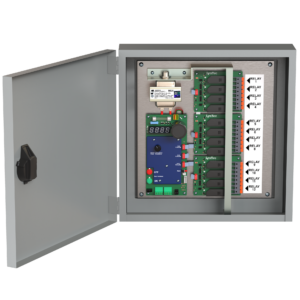
    Automated power sequencing for AV racks and distributed systems, protecting equipment from damaging inrush currents during startup.
    Showing 1-20 of 20

    Filter Products

    Types
    +
    Power Distribution
    +
    Power Control
    +
    Power Accessories
    +
    Statuses
    +
    Series
    +
    Product Region
    +
    Showing 20 of 20 products
    ABOUT SEQUENCED POWER CONTROL

    Engineered for safe, predictable system power-up and shutdown.

    Sequenced power control prevents the cumulative inrush current that can trip breakers and damage sensitive electronics when multiple devices power on simultaneously.

    In any professional installation, powering on all equipment at once creates a massive inrush current that can trip main breakers and shorten the lifespan of sensitive digital components. Sequenced power control solves this by energizing circuits in a controlled, predetermined order, allowing each device’s power supply to stabilize before the next one comes online.

    LynTec’s approach to sequencing is both robust and scalable. Systems range from simple, standalone rack-mount units to network-integrated breaker panels that manage hundreds of circuits. With user-configurable step rates, multi-protocol support (including IP, DMX, and sACN), and web-based interfaces, integrators can design safe, automated power-up and shutdown routines that protect equipment and simplify daily operations.
    WHY IT MATTERS

    Engineered for reliable, automated control.

    01

    Scalable from a single rack to an entire facility.

    Deploy simple, standalone sequencers for individual racks or integrate network-controlled breaker panels like the RPC series to manage up to 168 circuits from a single interface. Our modular architecture ensures consistent, reliable sequencing at any scale.
    02

    Flexible control for any automation environment.

    All network-enabled LynTec sequencers feature a built-in web server for simple setup and control. Native support for IP, DMX, sACN, and contact closure allows for seamless integration with lighting consoles, AV control systems, and building management platforms.
    03

    Customizable protection for sensitive equipment.

    Set custom sequence order and delay rates from a fraction of a second up to 999 seconds per circuit to match equipment specifications. Integrated brownout protection in our panel systems automatically shuts down circuits to prevent damage from under-voltage events.
    FAQ

    Your questions, answered.

    Common questions about designing and implementing power sequencing.
    Can a basic PDU be upgraded for sequencing or network control?

    While our basic PDUs cannot be field-upgraded internally, they serve as a reliable power foundation for a larger system. To add sequencing or network control, you would typically power the PDU from a dedicated LynTec power control product like an RPC panel or an NPAC sequencer. This modular approach allows you to start with simple distribution and scale up to intelligent control as system needs evolve.

    Can I add power sequencing to a panel that doesn’t have it?

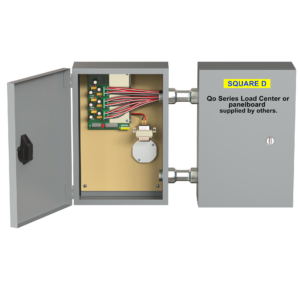
    Absolutely. This is a primary application for our retrofit controllers. By installing a kit like the MRTS series into a compatible Square D panel, you can add intelligent startup and shutdown sequencing to existing circuits. This protects sensitive audio and video equipment from damaging inrush currents without needing to install a new, dedicated sequencing panel.

    Can I customize the sequence timing for different types of equipment?

    Yes, all network-enabled LynTec sequencers provide circuit-level control over the power-up and power-down order. You can set custom delay rates from a fraction of a second up to 999 seconds between steps. This flexibility allows you to precisely match the startup requirements of sensitive equipment like digital signal processors, amplifiers, and video projectors, ensuring a safe and stable power-on process.

    Can I link multiple PDS units for more than 12 circuits?

    Yes, you can easily scale your sequencing for larger systems. While PDS units do not directly daisy-chain their internal logic, multiple units can be controlled from a single master switch or control system output. By wiring the contact closure inputs in parallel, you can initiate the sequence on all connected PDS units simultaneously for coordinated startup of dozens of circuits.

    Can I sequence power-up across multiple circuits or panels?

    Yes. Sequencing is a core feature designed to protect sensitive equipment from harmful inrush current. Within a single panel, you can create multiple sequence zones and define the step rate. For larger systems, multiple LynTec panels can be networked together and synchronized under a single control interface to ensure a coordinated and safe power-up and power-down sequence across an entire facility.

    Can I use a simple switch to control a full power-up sequence?

    Yes. A single contact closure event, like turning a key switch or pressing a button, can initiate a complete, pre-programmed power-on or power-off sequence. This allows for simple ‘one-touch’ control of an entire AV or lighting system from a lectern, wall plate, or other convenient location.

    Products like the RPC, NPAC, and CQ Series all support sequence initiation via contact closure, simplifying system operation for end-users while ensuring equipment is powered on and off safely.

    Can the NPAC run automated sequences without an external control system?

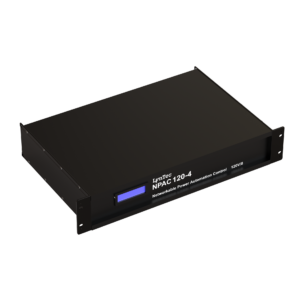
    Absolutely. The NPAC includes a built-in astronomical clock and event scheduler. You can program up to 84 timed events to trigger power sequences based on the time of day or relative to sunrise and sunset. This allows the NPAC to operate as a standalone power automation solution for applications that require daily startup and shutdown without needing a dedicated external controller.

    Do manual controllers offer any power sequencing capabilities?

    Manual controllers are designed for direct on/off switching and do not include internal time-delay or sequencing logic. Their function is to immediately energize or de-energize a circuit upon activation. For applications requiring a timed power-up or power-down sequence to protect sensitive equipment, we recommend our dedicated sequencing products like the RPC or PDS series.

    Do these surge protectors also provide power sequencing?

    LynTec surge protectors are specialized devices focused exclusively on power protection and filtration. They do not include built-in power sequencing functions.

    For applications that require a controlled power-up or power-down order to prevent speaker pops or equipment damage, these protectors should be paired with a dedicated LynTec power sequencer. This modular approach allows you to build a robust, integrated power infrastructure with best-in-class protection and control.

    Do your sequencers offer protection against brownouts or under-voltage?

    Yes. Our panel-based and distributed systems are engineered with integrated voltage protection. The RPC and XPC series feature automatic brownout protection that safely shuts down circuits during an under-voltage event. This critical feature protects sensitive downstream electronics from potential damage caused by unstable power, adding a layer of reliability to your entire installation.

    Does the RT Series provide multi-step power sequencing?

    The RT Series is designed for single-step remote power activation. It provides a dependable method for turning a single circuit on or off in response to a contact closure trigger. For applications requiring timed, multi-step sequencing with delays between circuits, we recommend exploring our networked RPC or PDS series panels, which offer advanced, programmable sequencing capabilities.

    Does the SCV Series provide power sequencing for my rack equipment?

    The SCV Series is designed purely for power protection and battery backup; it does not have built-in power sequencing capabilities. Its purpose is to provide a stable, uninterrupted source of power to other devices.

    For controlled startup and shutdown of equipment in a rack, we recommend pairing an SCV UPS with a dedicated power sequencer, such as a LynTec PDS or RPC panel. The SCV would feed the sequencer, ensuring the entire control chain is protected.

    How can I sequence power for equipment not in a central rack?

    The XPC Xtend Power Control series is engineered specifically for this scenario. It decouples control from the panel, allowing you to place compact, network-managed relay modules exactly where your equipment is located. This is ideal for controlling powered line arrays, digital signage, or remote video displays.

    XPC modules can be deployed as a standalone system or integrated as an extension of an existing RPC or NPAC installation, providing sequenced control over your standard IP network.

    How do I control an RPCR panel?

    RPCR panels are designed as part of a larger LynTec control ecosystem. They function as relay satellites and are controlled by a master controller, such as an RPC panel or an NPAC. The master unit provides the sequencing logic, scheduling, and user interface (web server, DMX, sACN, etc.), sending simple commands to the RPCR to actuate its relays as part of a system-wide sequence.

    How do I expand an MS system beyond a single panel’s circuit count?

    MS Series panels are designed for modular scalability. You can easily link multiple panels together using a simple low-voltage connection in a daisy-chain configuration. This allows you to create a single, unified sequencing system with a virtually unlimited number of circuits. The entire multi-panel system can then be controlled from a single initiation point, simplifying operation for large and complex installations.

    How does sequencing scale from a single rack to an entire facility?

    LynTec’s architecture is modular, allowing you to scale your power control infrastructure as needed. For individual racks, a standalone unit like the CQ 1515 or the network-enabled NPAC provides simple, reliable sequencing.

    For facility-wide control, the RPC Remote Control Breaker Panel system can manage up to 168 circuits from a single web interface. You can also use the XPC series to extend sequenced control to distributed equipment anywhere in the building, all integrated into one cohesive system.

    How is power sequencing configured on your controllers?

    Power sequencing is configured through a simple, browser-based interface on our network-enabled products like the RPC, NPAC, and XPC. This allows you to set the power-on and power-off order for every circuit or relay to prevent high inrush currents that can damage sensitive equipment.

    You can define custom step-rates between sequenced events, from a fraction of a second up to 999 seconds on some models. This provides the flexibility needed to safely manage the startup procedure for amplifiers, DSPs, projectors, and other professional AV gear.

    How is the power-up and power-down sequence configured?

    Sequencing is configured through the unit’s onboard web interface. You can easily set the order for each circuit to power on and off, as well as the delay time between each step. This ensures that components like amplifiers are powered on last and off first, preventing dangerous speaker pops and protecting sensitive downstream equipment.

    How is the sequencing on a PDS unit initiated?

    The PDS series is designed for straightforward integration. Sequencing is initiated via a simple, low-voltage dry contact closure from an external key switch, a control system relay, or another master power control panel. This allows for easy implementation into a wide range of system designs without requiring network access or complex programming.

    How is the SQ Series sequencer controlled?

    The SQ Series is controlled via a simple contact closure input. This allows for straightforward remote activation of the power up and power down sequences.

    You can trigger the unit using a basic momentary wall switch, a key switch, or a relay output from any third-party control system like Crestron, AMX, or Q-SYS. This design ensures reliable operation without needing a network connection or complex programming.

    How precise is the sequencing and timing control on the NPAC?

    The NPAC provides granular control over startup and shutdown sequences via its web interface. You can define a custom power-up and power-down order for each circuit. The delay time between each step in the sequence is also programmable, with settings from a fraction of a second up to 999 seconds. This ensures sensitive equipment is powered on and off in a safe, reliable order.

    Is the sequencing delay time adjustable on the SQ?

    The 3-step sequencing delay on the SQ Series is preset at the factory and is not user-adjustable. This ensures consistent, reliable performance and simplifies installation.

    The fixed delay is engineered to provide safe startup and shutdown intervals for the majority of professional audio and video equipment, protecting it from high inrush currents without requiring any onsite programming or configuration.

    What control systems can I integrate LynTec sequencing with?

    Our network-enabled sequencers (RPC, NPAC, XPC series) are designed for broad compatibility. They feature a built-in web server for direct setup and control via IP. Native support for DMX, sACN, and Telnet allows for seamless integration with professional lighting consoles and AV control systems from manufacturers like Crestron and AMX.

    Additionally, standard contact closure inputs enable simple control from wall switches, sensors, or life-safety systems.

    What functions can I manage through the web interface?

    The browser-based interface provides comprehensive remote control over your power system. You can perform initial system setup, configure precise power sequencing order and timing, assign individual circuits to control zones, and monitor the real-time on/off status of every circuit. You can also manually trigger power sequences, which is useful for system testing and remote troubleshooting without requiring a site visit.

    What is the commissioning process for a sequencing system?

    LynTec systems are designed for straightforward setup by the integrator, eliminating the need for on-site factory commissioning. All network-enabled products, including the RPC, NPAC, and XPC series, feature a built-in web server. This provides a simple, browser-based interface for all configuration tasks, such as setting the sequence order, delay times, and control zones, significantly reducing installation time and complexity.

    If you have any inquiries about our products, feel free to ask us or visit our help desk for more information.
    EXPLORE MORE

    Other power control methods

    Contact Closure Control

    Simple, direct power control using physical switches, sensors, or third-party automation systems. LynTec panels use contact closure inputs to trigger power-on, power-off, or emergency sequences, ensuring reliable integration with fire alarms and building management systems.

    DMX-Controlled Power

    Integrate circuit-level power management directly into standard lighting control workflows. LynTec DMX-controlled products range from portable relays to facility-wide breaker panels, all communicating via DMX, RDM, or sACN.

    Network-Controlled Power

    Power control panels, relays, and modules managed remotely over standard IP networks. Enables browser-based setup, monitoring, and integration with building automation and AV control systems.

    Manual Power Control

    Provides simple, direct on/off control for power circuits using physical interfaces like key switches and push buttons. Ideal for applications requiring straightforward, non-networked operation or a secure, physical lockout for safety and maintenance.

    Designing a sequenced power control system?

    Our application engineers can help you specify the right sequencing solution to protect your equipment and simplify system operation.